
Product care
Care
Lead-free crystal, hand-finished to hold its clarity for years — with a small amount of looking after.
Built to last
Every glass is made to be used, not admired from a shelf.
Each piece is hand-finished from lead-free crystal, so it carries the weight and ring of fine glassware without the compromises of traditional lead crystal. Treated well, it will outlast the bottle you're pouring.
How to clean
Two ways to wash, one that keeps the shine.
Every piece we make is lead-free crystal, so the same care applies whether it's the glass in your hand today or a decanter that joins the range later.
Our crystal glassware is dishwasher safe on the top rack, but crystal kept at its brightest is crystal washed by hand. For everyday use, either method is fine - for the glasses you reach for on special occasions, we'd hand wash.
Warm water, soft touch
Wash in warm water with a small amount of mild, unperfumed detergent. Use a soft cloth or sponge - avoid anything abrasive, which can scratch the surface over time.
Dry before it drips dry
Dry immediately with a soft, lint-free cloth. Left to air-dry, minerals in tap water can settle and leave a faint cloudiness on the crystal.
Top rack, gentle cycle
If using a dishwasher, place on the top rack away from other items, and skip the heated dry setting. High heat is the main cause of clouding over time.
At a glance
A few habits that make it last.
Do
- Wash by hand when you can, especially for everyday favourites
- Dry immediately with a soft cloth to prevent water spotting
- Let glasses reach room temperature before pouring anything hot or icy
- Store upright on a flat, stable shelf
- Hold by the base or lower body when washing, not the rim
Don't
- Use the heated dry setting on your dishwasher
- Use bleach, abrasive cleaners, or scouring pads
- Stack glasses inside one another for storage
- Pour boiling liquid into a chilled glass, or vice versa
- Let glasses air-dry with hard water still on the surface
Storage & handling
Give it room to breathe.
Crystal is more resilient than it looks, but it's still glass. A little care in how it's stored and handled goes a long way between pours.
- ShelvingStore upright on a flat surface, spaced so glasses don't touch — contact points are where chips start.
- TemperatureAvoid sudden shifts in temperature. Let a glass warm up before it meets a fresh pour after time in a cold cupboard.
- TransportWrap individually in soft cloth or the original gift canister if moving house or travelling with a set.
Common questions
If something's not quite right.
Yes - it's safe on the top rack. For glasses you want to keep at their brightest for as long as possible, we still recommend hand washing, since repeated dishwasher cycles are the most common cause of clouding over time.
Cloudiness is usually mineral buildup from hard water or repeated high-heat dishwasher cycles, not a fault in the crystal. A soak in warm water with a splash of white vinegar, followed by a hand dry, will usually restore the clarity.
Get in touch through our contact page with a photo and your order number. We'll let you know whether it's covered and help sort a replacement.
We'd avoid it. Rapid temperature changes are the fastest way to stress crystal and cause a crack. Chill in the fridge if needed, and let it come back to room temperature before a hot pour.
Yes - this guide covers all current and future Denver & Liely glassware. Where a specific piece needs a different approach, we'll note it on that product's page.
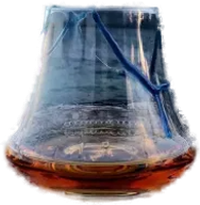
For the adventurous
Kintsugi - mending with gold
Kintsugi is the centuries-old Japanese practice of repairing broken pottery and glass with a lacquer mixed with powdered gold - not to hide the break, but to trace it. The philosophy holds that an object's history, including the way it broke, is worth keeping in view rather than disguising.
If a glass of yours ever breaks, you're welcome to try it. It won't look like it did before - it will look like something that survived, which is the point.
Piece it together
Lay the fragments out and dry-fit them first, so you know the puzzle before the glue does.
Fill the seam
A clear or gold-tinted epoxy along each break, applied thin, holds the pieces and leaves room for gold on top.
Trace it in gold
Once cured, brush the seams with gold mica powder or genuine kintsugi lacquer, and let the crack become the feature.
This is entirely at your own risk. Broken crystal has sharp edges — handle fragments with care, and stop if you're not confident doing this safely.
A repaired glass is for display, not drinking. Household epoxy and most gilding materials aren't food-safe, so a kintsugi-mended piece shouldn't go back into service holding a drink. Keep it as an object rather than a glass again.
Denver & Liely isn't able to take responsibility for the outcome of a repair attempt, and this doesn't affect anything covered separately under our warranty. If you'd rather we sort a replacement instead, our team's always happy to help.
Still have a question?
Our team can help with anything from a cloudy glass to a warranty claim.